
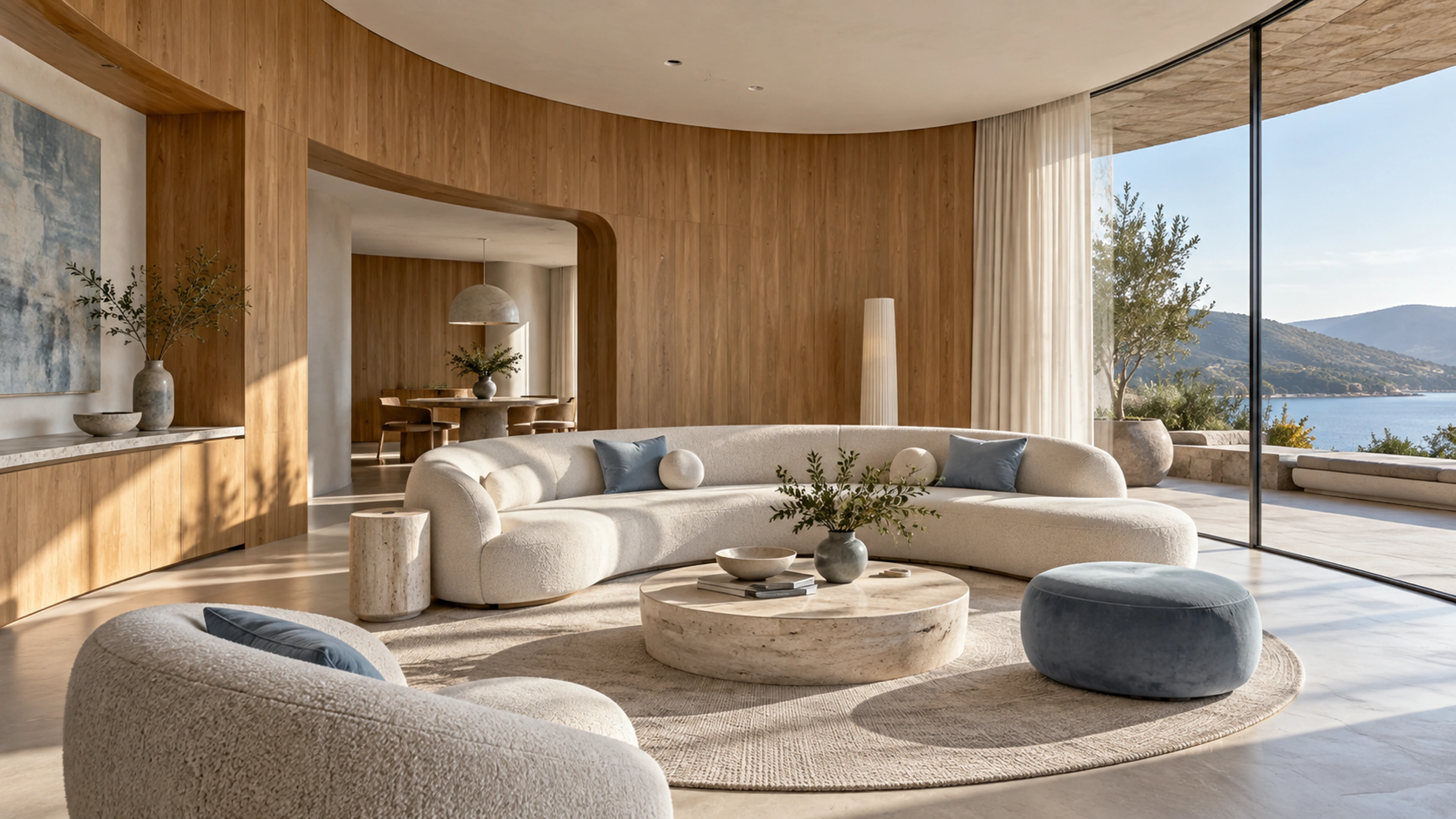
Neuroarchitecture and Curved Forms: How Furniture Geometry Relates to Experience
Can shape contribute to the sense of ease or distance we feel on entering a room? Neuroarchitecture examines spatial experience through psychology and neuroscience. Geometry contributes alongside light, scale, materials and individual experience. Research does not guarantee identical emotional responses or health benefits for everyone.
1. Contour and visual preference
Bar and Neta’s 2006 study found a preference for curved objects over comparable angular objects. Their 2007 fMRI study associated angular objects with greater amygdala activation than curved counterparts, consistent with the hypothesis of an association with potential threat. Amygdala activity does not mean fear alone, however. Responses to photographs do not demonstrate lasting stress in a real room, nor prove that curved furniture treats the nervous system.
2. Beauty is not the same as approach
Vartanian and colleagues’ 2013 study examined judgments of architectural photographs. Curved interiors received higher beauty judgments, with a different pattern of anterior cingulate activation during aesthetic assessment. Crucially, contour had no significant effect on approach-avoidance decisions. Finding a space beautiful does not automatically explain a decision to enter or remain in it.
3. Visual flow in context
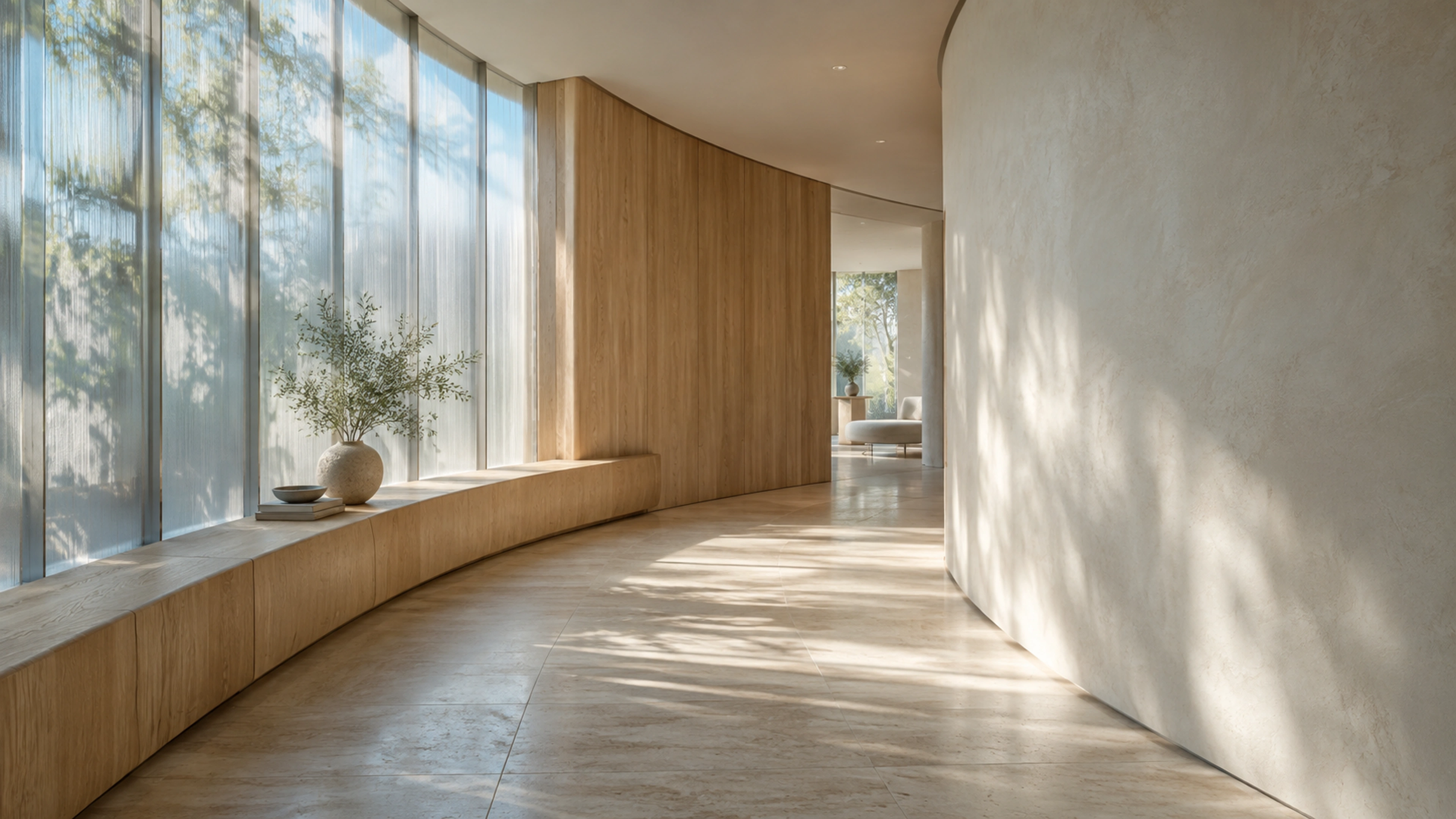
A curved sofa, oval table or reception desk can establish continuity and contrast with linear architecture. This is a design consideration, not evidence that curves reduce eye-muscle fatigue or trigger parasympathetic relaxation. Banaei and colleagues’ 2017 study examined brain dynamics in virtual interiors; Dazkir and Read’s 2012 work examined furniture forms and emotional responses. Different methods call for contextual interpretation rather than universal design rules.
4. Craft and engineering
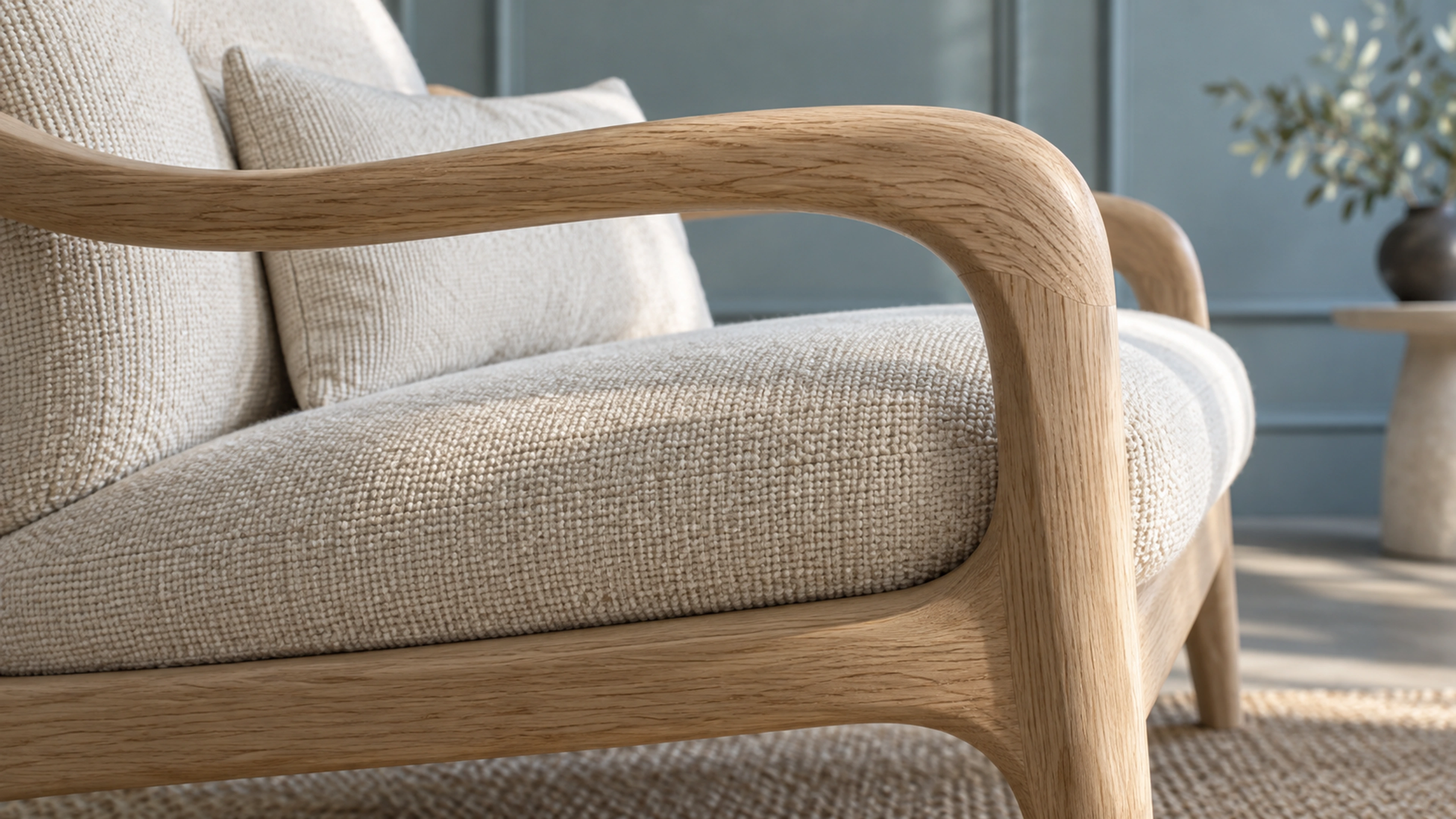
Curved furniture requires its structure, joints, upholstery and finishes to work with the same geometry. Bent timber, laminated layers, pressing and CNC machining are selected according to material, loads and radius. No technique alone guarantees decades of durability; detailing, quality control and use also matter.
Foam density, firmness and resilience are distinct properties. Curved upholstery calls for shaped layers and prototype evaluation, not a single mandatory density for every product. On concave and convex surfaces, fabric stretch, grain, seam position and tension must be coordinated to preserve the form and avoid puckering.
5. Balance within the project
Organic seating can help define reception areas; an oval table can create contrast with a rectilinear structure. Accessibility, circulation, cleaning, maintenance and intensity of use remain essential. Not every element needs to be curved. Acoustic performance depends on materials, thickness, surface area, volume and arrangement. Curvature alone does not guarantee a lower reverberation time; measurement or specialist assessment is needed.
Turkuaz’s project approach
At Turkuaz Mobilya, timber and textiles contribute to the character of the whole space. We translate the designer’s line into production by considering appearance together with use, materials and workmanship. In hotels, residences and commercial interiors, appropriate details, prototypes and consistent execution matter more than a universal rule about shape.