
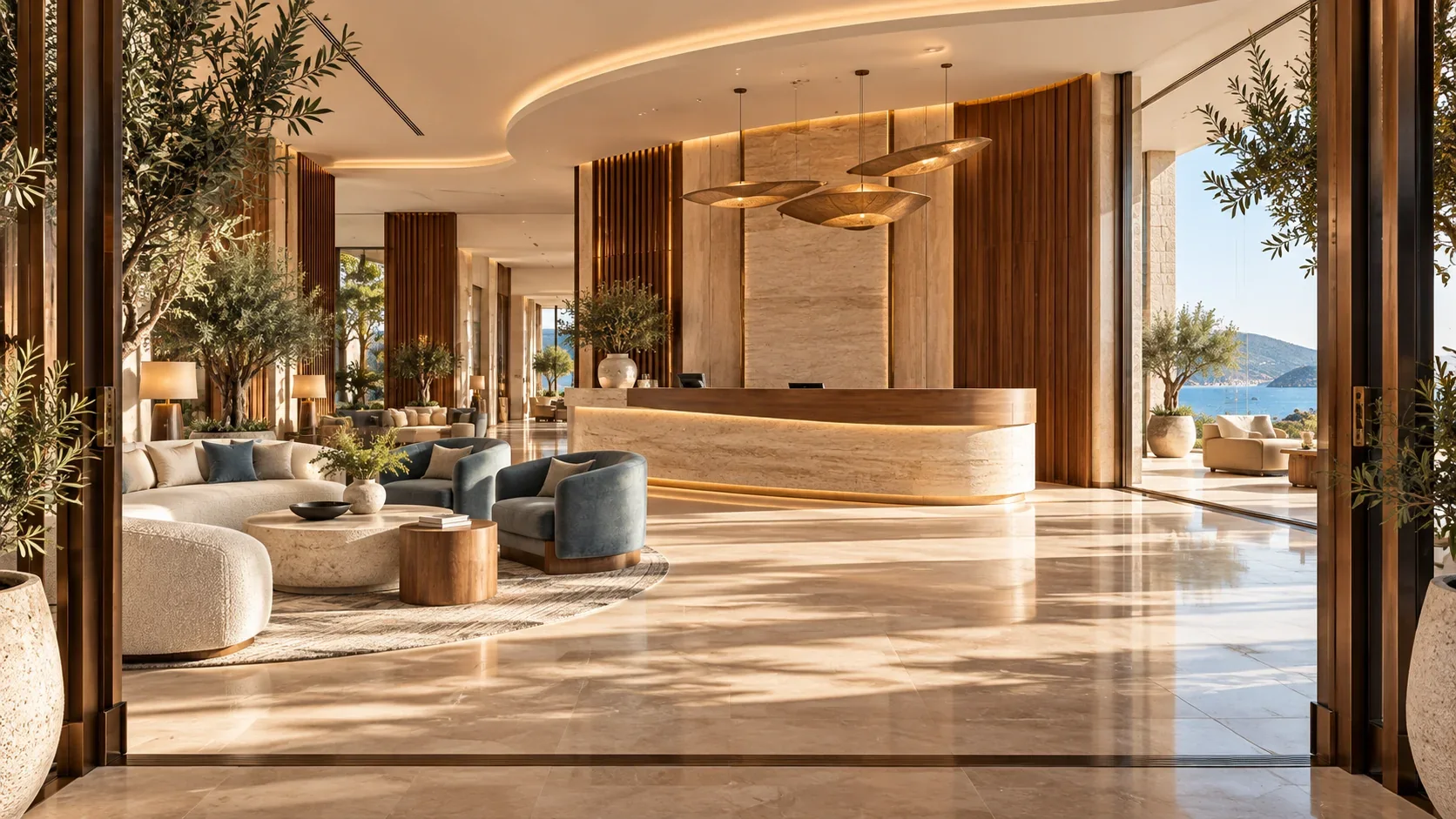
First Impressions in the Hotel Lobby: Furniture for the Welcome Area
When guests enter a hotel, the lobby is the first thing they see. Rooms, restaurants and the spa come later; the first impression is formed in those few metres between the door and the reception. That is why lobby furniture does more than provide seating – it tells the hotel's character.
In this article we look at the furniture that makes up the welcome area, research on what shapes first impressions in the lobby, and how furniture should be planned in such an intensively used space.
1. What shapes the first impression?
A study of hotel lobbies shows that guests' overall impression of a lobby is influenced most by colour, lighting and style, with colour emerging as the strongest factor of the three. In the same study, layout did not show a significant effect on overall impression.
This matters for furniture: in the lobby, furniture is the biggest carrier of colour and style. The fabric of the sofas, the wood tone of the desk and the stone surfaces of the tables form a single colour palette in the guest's eyes, together with the walls and floor. Layout, on the other hand, shapes use more than impression: where guests wait, where they meet and how they walk to the reception.
2. The reception desk: the focal point of the lobby
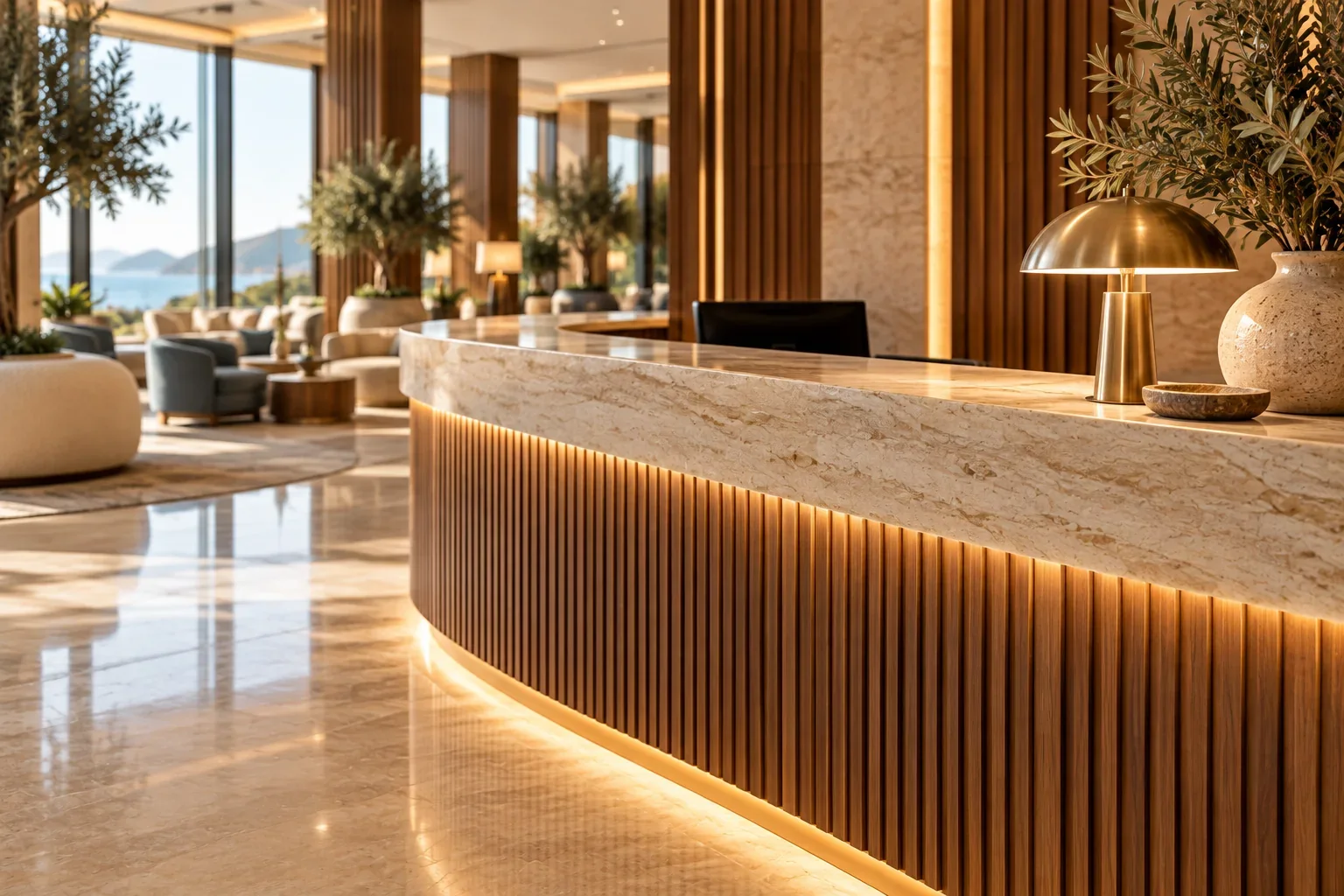
In most lobbies the reception desk is the first piece that catches the eye when entering. It is a workspace used by both guests and staff: representation at the front, order behind.
The front of the desk carries the hotel's material language; the choice of wood, stone or metal sets the overall tone of the lobby. The back is a workstation: it needs hidden but easily accessible compartments for computers, printers, key card encoders and cables. A surface for luggage or bags on the guest side and a lower section for wheelchair users are also part of a good desk.
As fixed furniture, the desk is planned together with construction, in line with electrical and data installations. Concealed lighting keeps the desk the focal point of the lobby in the evening too.
3. Seating groups: from waiting area to meeting place
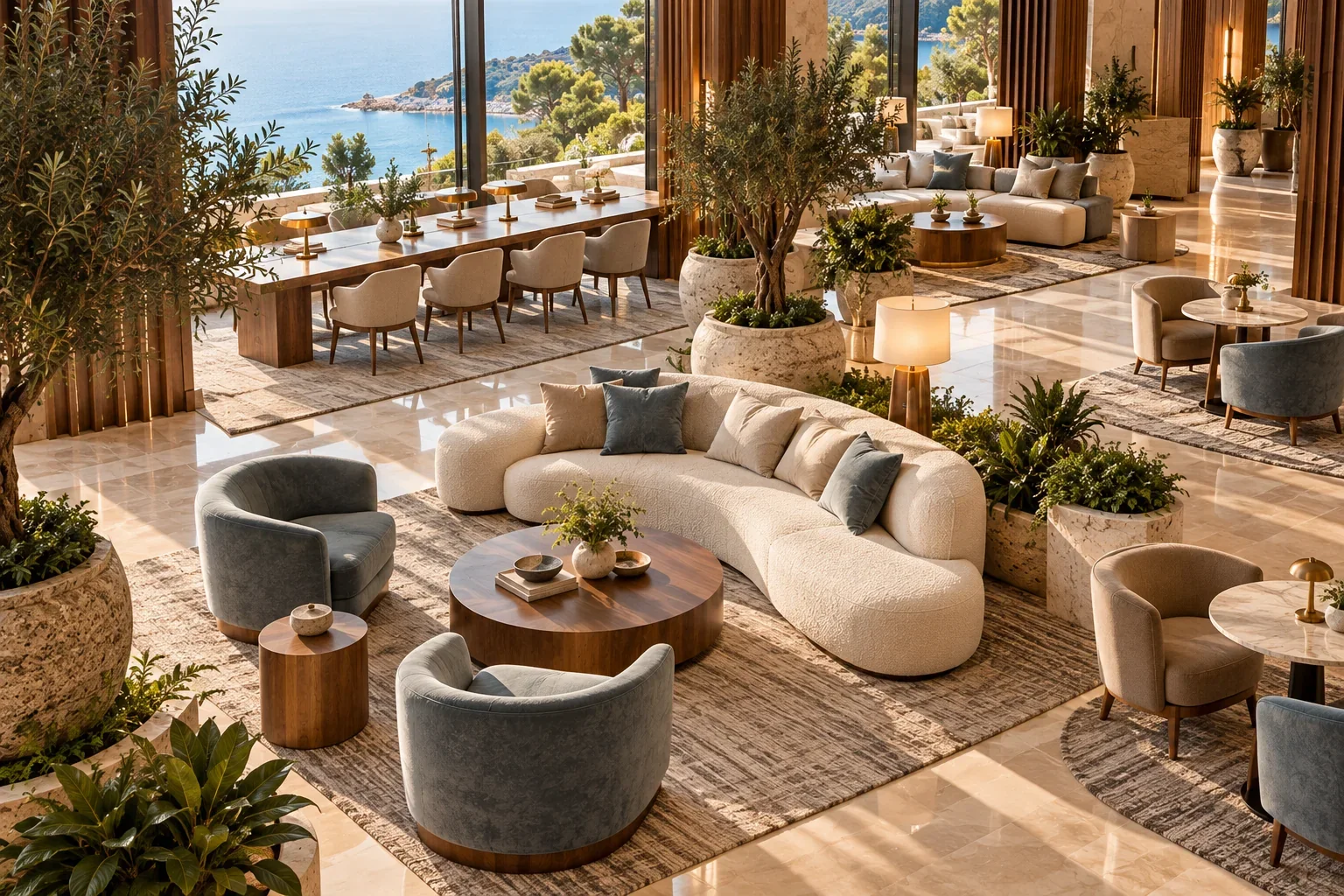
Lobby seating is no longer just a place to wait for check-in or check-out. Guests meet, work and have coffee here; visitors from outside the hotel use the lobby as a meeting point too. This calls for different seating scenarios:
- Short waits: More upright armchairs with arms that are easy to get up from.
- Longer stays and conversation: Deep-seated sofas and lounge chairs around a low table.
- Work: A shared table by the window, upright chairs and access to power.
- Meetings for two: Small coffee tables and seating for two.
Separating these zones with rugs, plants and the furniture itself turns the lobby from one large, empty hall into several small, comfortable rooms. Curved seating groups also help define circulation routes in large lobbies.
4. Durability: the hotel's most heavily used furniture
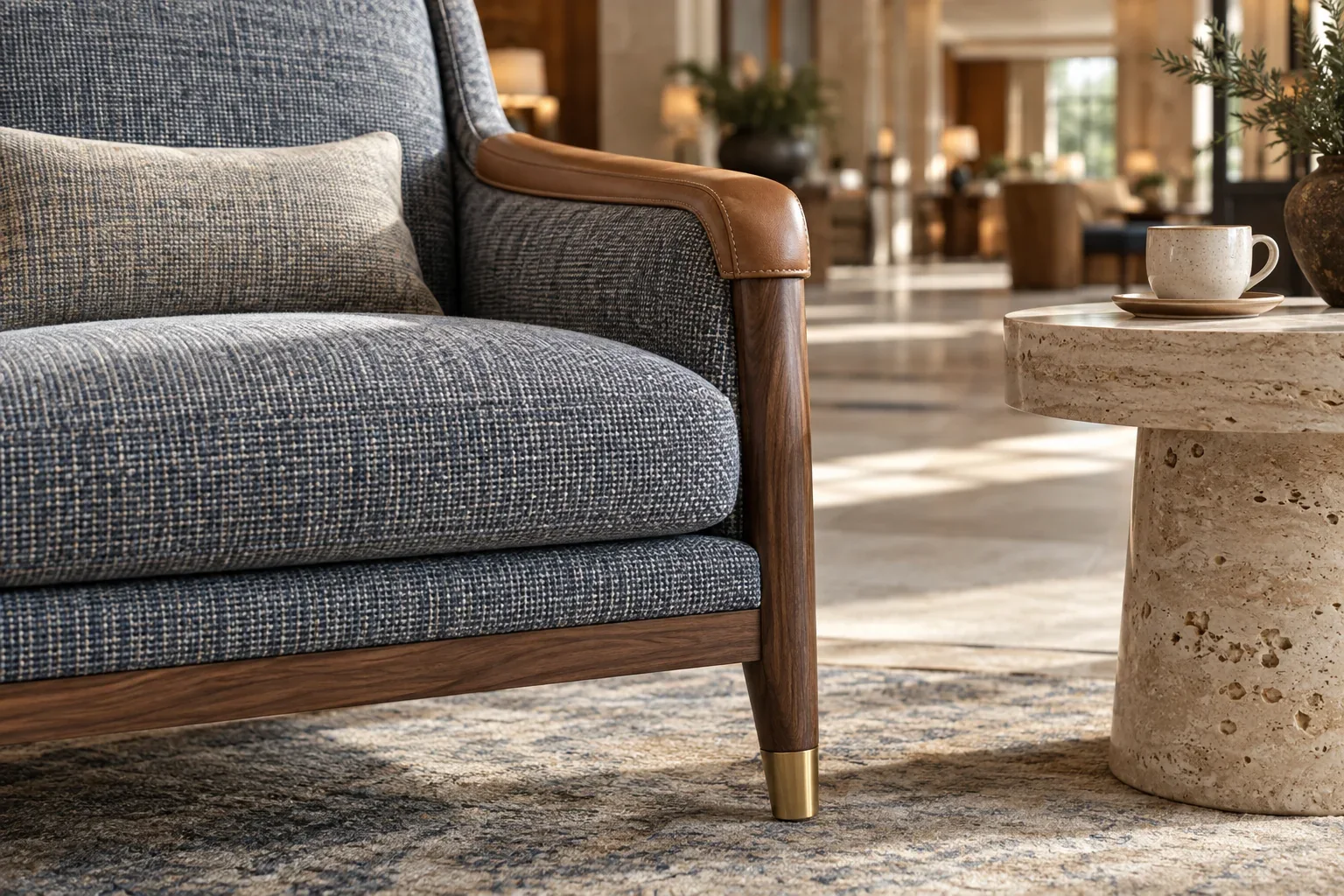
A lobby armchair is used far more than a lounge chair in a guest room. All day, different guests sit down, get up and leave their bags on it. That is why material choice for lobby furniture is a decision about durability as much as aesthetics.
The abrasion resistance of upholstery fabrics is measured with the Martindale test. While at least 40,000 rubs is generally recommended for hotel rooms and restaurants, 60,000 rubs or more is preferred for busy areas such as lobbies. Using leather or solid wood on the most frequently touched surfaces, such as armrest ends, protects the part of the fabric that wears fastest. On coffee and side tables, stain- and heat-resistant surfaces make a difference against cup marks and scratches.
The fire behaviour of upholstered furniture is also critical in the lobby. Ignitability tests such as EN 1021 and the regulations of the project country determine which fabrics and foams can be used.
5. Light, acoustics and maintenance
The effect of lighting on impression found in the research is a reminder that furniture must be considered together with light. Light-coloured fabrics and stone surfaces look airy in daylight, while warm, indirect light in the evening creates a more intimate lobby atmosphere. Lamps placed on the desk and among the seating groups provide the layered light that ceiling lighting alone cannot.
In lobbies with high ceilings and hard floors, sound echoes easily. Upholstered furniture, rugs and fabric-covered panels absorb part of the sound and make the lobby calmer.
Finally, maintenance: removable covers, replaceable cushions and standard fittings allow an armchair to be refreshed within hours during the busy season.
Turkuaz's project approach
At Turkuaz Mobilya, lobby projects are handled as a single file, from the reception desk to the seating groups. The desk and fixed panels are planned according to the construction schedule, the seating groups according to use scenarios and durability criteria; both are drawn by the same interior design team and produced in the same facility. This way, the first impression a guest has at the door speaks the same language as the rest of the hotel.
If you would like to discuss your lobby project, we would be glad to hear from you.